

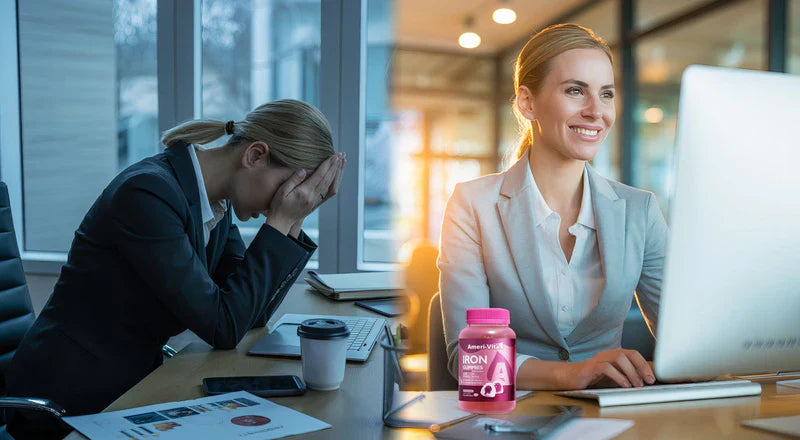
It's the conversation we keep having: "I'm just so tired." So is everyone, apparently. But behind a lot of that exhaustion is a single, fixable shortfall — iron.
How common is it really?
The World Health Organization estimates that around one in three women of reproductive age has insufficient iron. In the UK alone, surveys suggest the number is north of a quarter. Pregnancy, periods and plant-based diets all pull levels down.
Symptoms that don't always look like iron
Tiredness is the headline, but it isn't the only sign. Brittle nails, hair shedding, cold hands and feet, breathlessness on stairs, restless legs at night, brain fog, and the kind of paleness friends start commenting on. Many women have learned to ignore the lot.
Tablets vs liquid iron
Traditional ferrous-sulphate tablets are notorious for being hard on the stomach. A liquid iron formula tends to be gentler and absorbs more efficiently, which is why so many midwives and dietitians lean towards them now.
Pair it with the right things
Vitamin C boosts iron absorption — orange juice with breakfast, peppers with dinner. Tea and coffee, on the other hand, block it. Try to leave at least an hour between your morning cuppa and your iron.
When you'll feel the difference
Energy can lift within a couple of weeks; hair, nails and skin take longer because they're playing catch-up. If you've been tired for months, please ask your GP for a ferritin test as well — it's the marker that actually matters.